System Design Basics for Developers
System Design Basics for Developers System Design Basics for Developers | System design plays a crucial role in building scalable, reliable, and efficient software applications. It

By Admin
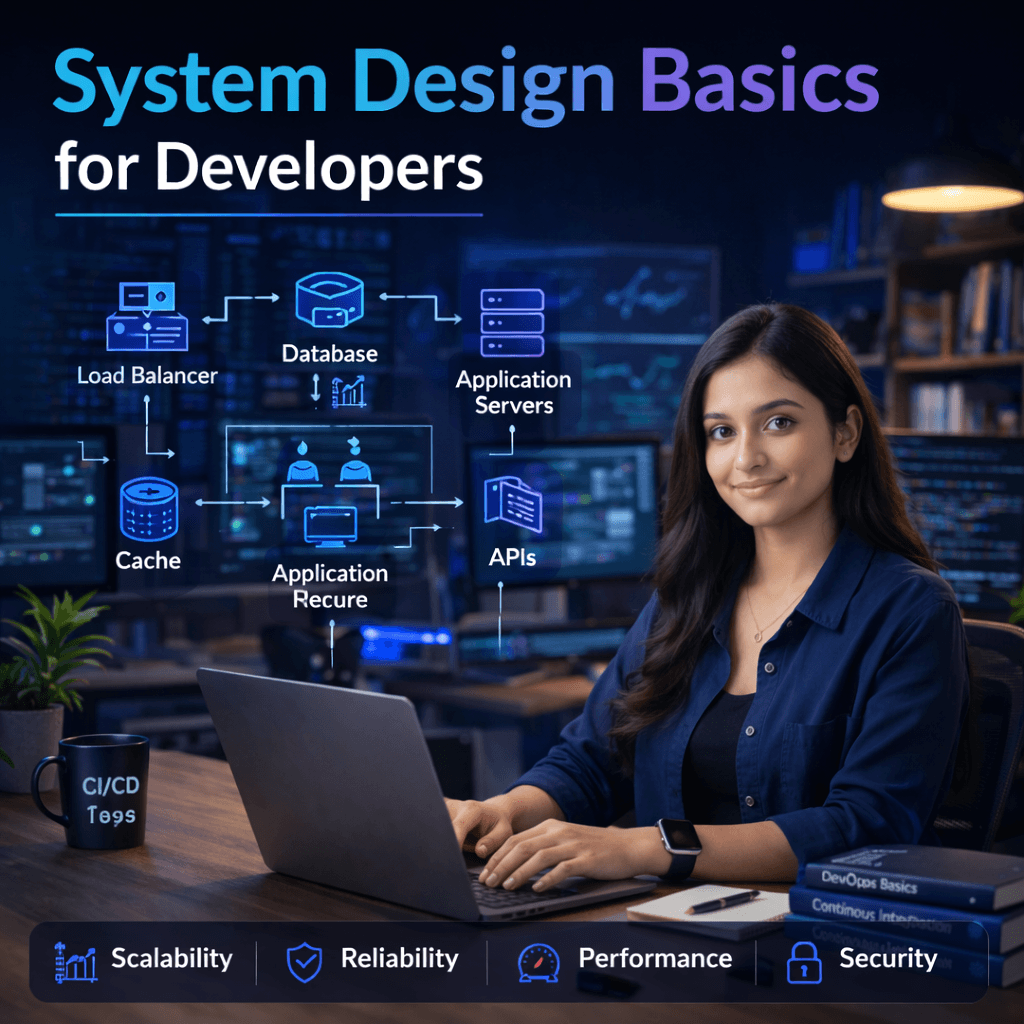
System Design Basics for Developers
System Design Basics for Developers | System design plays a crucial role in building scalable, reliable, and efficient software applications. It helps developers create systems that can handle real-world demands and future growth.
In today’s digital world, applications must support millions of users. Therefore, strong system design is no longer optional—it is essential.
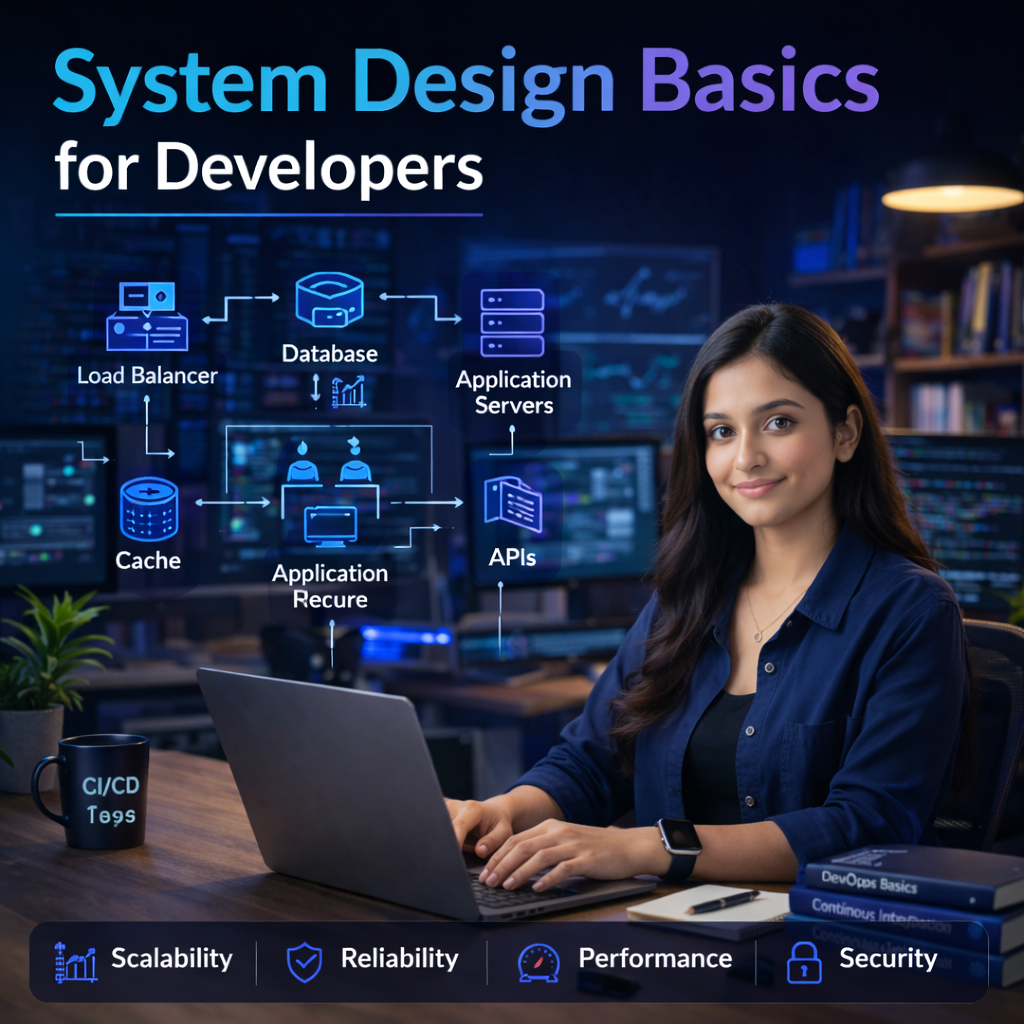
A Complete Guide To System Design Basics for Developers
Why System Design is Important for Developers?
Modern applications are complex. As a result, they require thoughtful architecture to perform well under scale.
System design helps in:
- Designing scalable and high-performance applications
- Handling large user traffic efficiently
- Improving system reliability and uptime
- Managing resources more effectively
- Supporting future growth
- Building modular and maintainable systems
In addition, it is essential for developers working on web, mobile, and cloud-based applications.
What is System Design?
System design is the process of defining architecture, components, and data flow. In simple terms, it shows how different parts of a system work together.
Moreover, it ensures smooth communication between frontend, backend, databases, and external services. As a result, the system performs efficiently.
Key Features of a Good System Design
A well-designed system should include the following features:
- Scalability – Handles growth in users and data
- Reliability – Ensures consistent performance
- Availability – Minimizes downtime
- Performance – Provides fast response times
- Security – Protects data from threats
- Maintainability – Makes updates easier
- Flexibility – Adapts to new changes
Furthermore, these features help systems stay stable under pressure.
What Does a System Design Engineer Do?
A system design engineer builds strong and scalable architectures. In addition, they ensure systems perform well under heavy load.
They:
- Design system architecture and workflows
- Choose the right technologies and databases
- Implement caching and load balancing
- Optimize performance and scalability
- Handle failures and recovery strategies
- Document the system clearly
As a result, businesses get reliable and future-ready applications.
Core Components of System Design
System design includes several key components. Each plays an important role:
- Load Balancer – Distributes incoming traffic
- Database – Stores and manages data
- Cache – Speeds up data access
- Application Servers – Handle business logic
- CDN – Delivers content faster globally
- Message Queues – Enable async communication
- APIs – Connect different services
Together, these components create a high-performing system.
Types of System Design
Different projects require different architectures. Therefore, choosing the right one is important:
- Monolithic Architecture – Single unified system
- Microservices Architecture – Modular services
- Distributed Systems – Multiple systems working together
- Event-Driven Architecture – Reacts to events
- Serverless Architecture – No server management required
Each type has its own advantages. So, the choice depends on project needs.
Benefits of Good System Design
Good system design provides several advantages. For example:
- Improved scalability and performance
- Better user experience
- Reduced system failures
- Easier maintenance and updates
- Efficient resource usage
- Faster development cycles
- High reliability
Therefore, investing in system design leads to long-term success.
Common Use Cases of System Design
System design is used in many real-world applications. For instance:
- Social media platforms
- E-commerce websites
- Streaming services
- Online banking systems
- Cloud-based applications
- Messaging apps
- Ride-sharing platforms
Clearly, every large-scale application depends on strong system design.
When Do You Need System Design?
You should focus on system design in the following cases:
- When building scalable applications
- When handling high traffic
- When improving performance and reliability
- When designing backend systems
- When preparing for technical interviews
- When working on distributed systems
In short, system design becomes critical as your application grows.
Challenges in System Design
Although system design is powerful, it comes with challenges:
- Handling high traffic and scaling
- Managing data consistency
- Ensuring security
- Reducing latency
- Designing fault-tolerant systems
- Choosing the right architecture
However, proper planning can solve these issues effectively.
Why Choose DeveloperBox for System Design Solutions?
At DeveloperBox, we provide expert system design solutions tailored to your needs.
We focus on:
- Scalable and robust architecture
- High-performance systems
- Secure infrastructure
- Clean and maintainable code
- Modern technologies
- End-to-end support
As a result, we help businesses build systems that scale efficiently and perform reliably.
If you want, I can next:
- Add SEO keywords + meta tags
- Convert this into a high-ranking blog post
- Add diagrams for better understanding
- Or optimize it for Google ranking (Yoast 90+)

Next article
How AI Automation Cuts Operational Overhead for Growing Teams
Ready to Transform Your Business with AI?
Let's discuss how our AI solutions can help you achieve your goals. Schedule a free consultation with our experts.
Schedule a Consultation