SQL vs NoSQL Databases
SQL vs NoSQL Databases SQL vs NoSQL Databases for Beginners | A developer getting started with databases focuses on storing, managing, and retrieving data efficiently using the rig

By Admin
SQL vs NoSQL Databases
SQL vs NoSQL Databases for Beginners | A developer getting started with databases focuses on storing, managing, and retrieving data efficiently using the right type of database system.
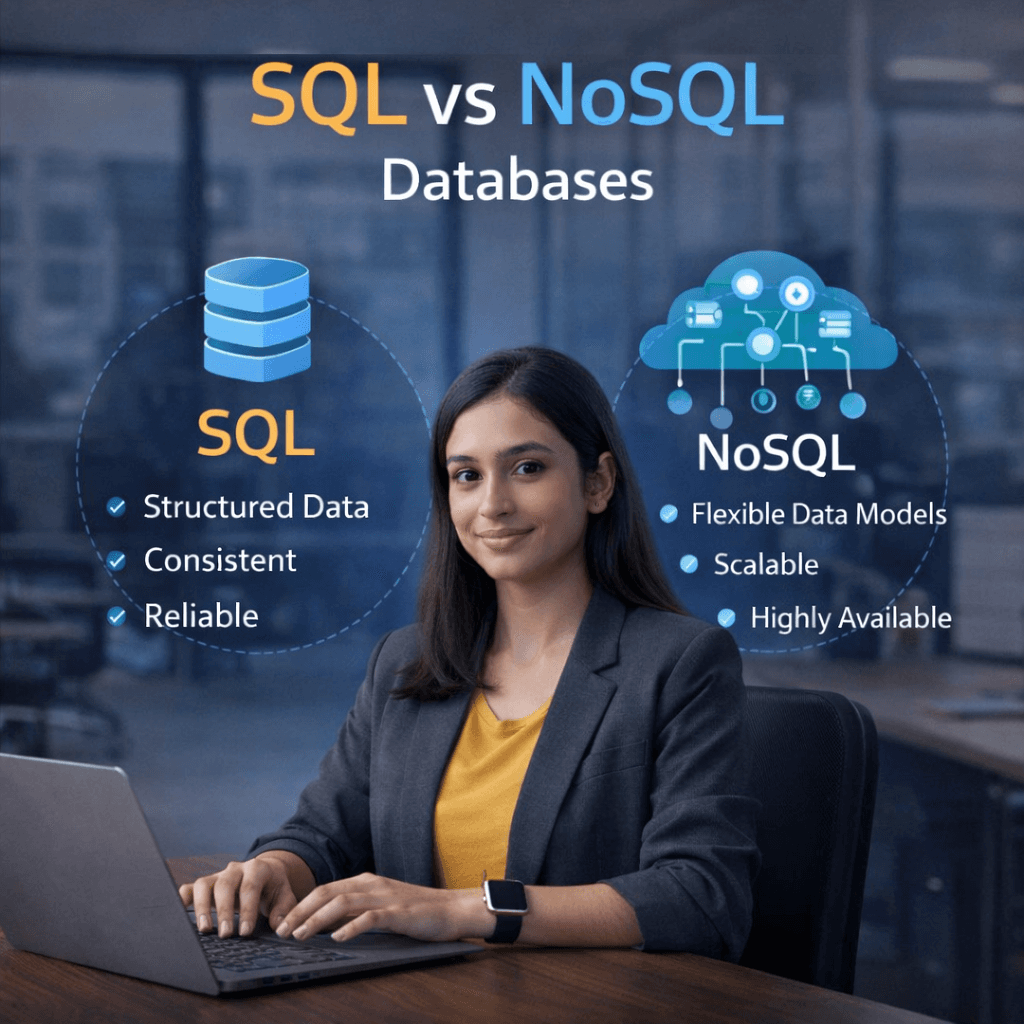
Instead of using a single approach for all data needs, modern applications choose between SQL and NoSQL databases based on flexibility, scalability, and structure. SQL databases use structured schemas and tables, while NoSQL databases handle unstructured or semi-structured data more dynamically.
Because of this distinction, developers can design systems that are both efficient and scalable.
Why SQL & NoSQL Matter
Managing data is at the core of every application. Rather than forcing all data into rigid structures, developers now select database types based on specific use cases.
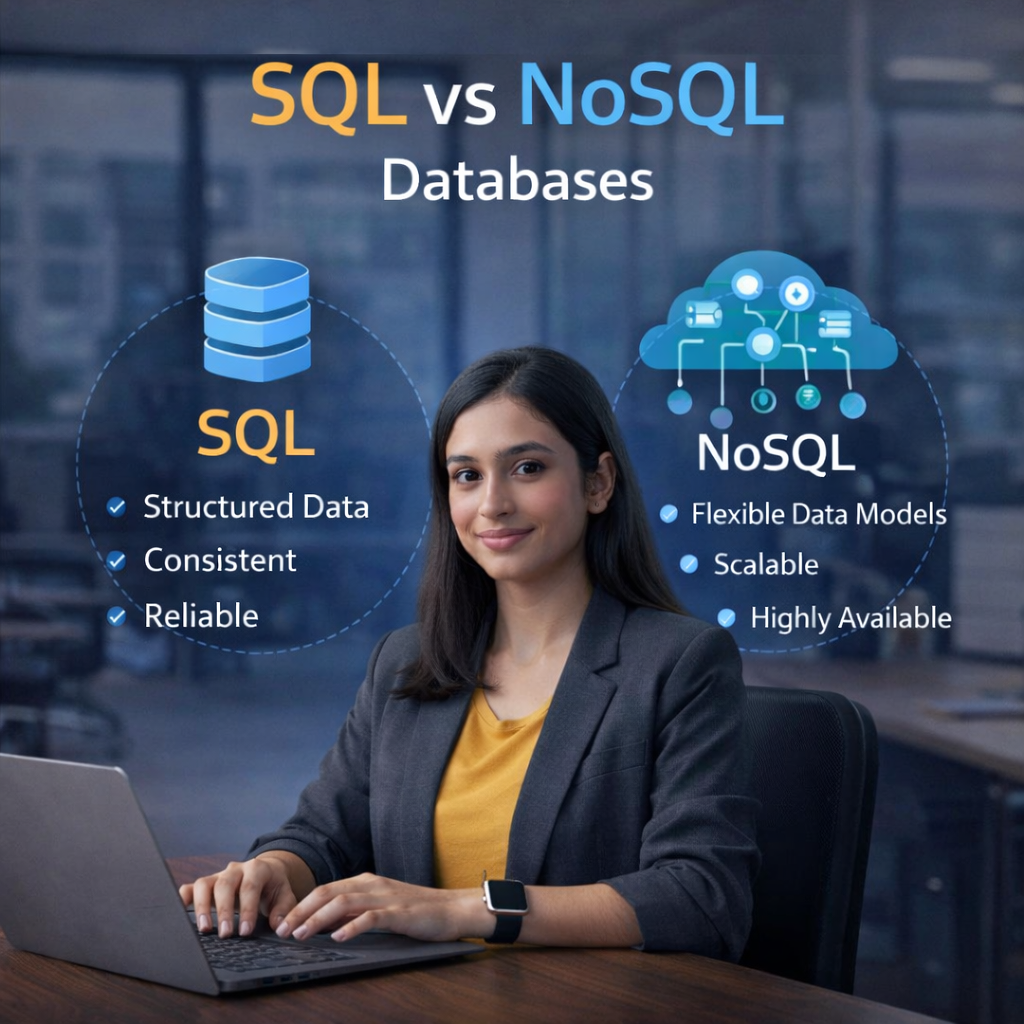
SQL databases ensure consistency and reliability, especially for structured data and transactions. NoSQL databases, on the other hand, provide flexibility and high scalability for modern applications.
As a result, developers can build systems that perform well under different requirements.
Understanding SQL Databases
Before exploring flexible data models, learning SQL databases is essential. They organize data into tables with predefined schemas, making relationships between data clear and consistent.
Instead of storing random data, everything follows a structured format. This approach improves data integrity and makes querying more predictable.
For example, applications like banking systems rely on SQL to ensure accurate and secure transactions.
Understanding NoSQL Databases
Once SQL basics are clear, NoSQL databases become easier to understand. Unlike SQL, they do not require fixed schemas, allowing developers to store data in various formats such as documents, key-value pairs, or graphs.
Managing large volumes of rapidly changing data becomes much simpler. Additionally, scaling horizontally across multiple servers is more efficient.
Because of these features, NoSQL is widely used in real-time applications and big data systems.
What Beginners Actually Do
Starting with small projects is the best way to learn. Instead of diving into complex architectures, beginners usually begin with simple CRUD operations.
Creating tables in SQL and experimenting with document storage in NoSQL helps build a strong foundation. Gradually, understanding grows as developers work with real-world data scenarios.
Over time, choosing the right database for each project becomes easier.
Tools That Make Learning Easier
Using the right tools simplifies the learning process. SQL databases like MySQL or PostgreSQL provide structured environments for practice.
For NoSQL, tools like MongoDB offer flexibility and ease of use. Additionally, database clients and cloud services help developers test and deploy applications more efficiently.
Combining these tools creates a practical and hands-on learning experience.
Benefits of Learning SQL & NoSQL
High demand for database skills makes this knowledge extremely valuable. Beyond career opportunities, it improves how developers design and manage applications.
Better data handling, improved performance, and scalable architectures are key advantages. More importantly, understanding both types allows developers to choose the best solution for each problem.
In the long run, this versatility becomes a major strength.
When to Start Learning
Basic programming knowledge is enough to begin learning databases. Instead of waiting, starting early helps build confidence faster.
Although NoSQL may seem unfamiliar at first, consistent practice makes it easier to grasp. Step by step, concepts begin to connect naturally.
Eventually, working with both SQL and NoSQL becomes a normal part of development.
Why Choose DeveloperBox
Practical experience is essential for mastering databases. At DeveloperBox, the focus remains on real-world usage rather than just theory.
Hands-on projects, guided exercises, and real data scenarios help learners build confidence. Instead of only understanding concepts, developers gain practical skills.
As a result, learners become ready to work with modern data systems in real applications.

Next article
How AI Automation Cuts Operational Overhead for Growing Teams
Ready to Transform Your Business with AI?
Let's discuss how our AI solutions can help you achieve your goals. Schedule a free consultation with our experts.
Schedule a Consultation