Docker & Kubernetes for Beginners
Docker & Kubernetes for Beginners Docker & Kubernetes for Beginners | A developer getting started with Docker and Kubernetes focuses on building, deploying, and managing ap

By Admin
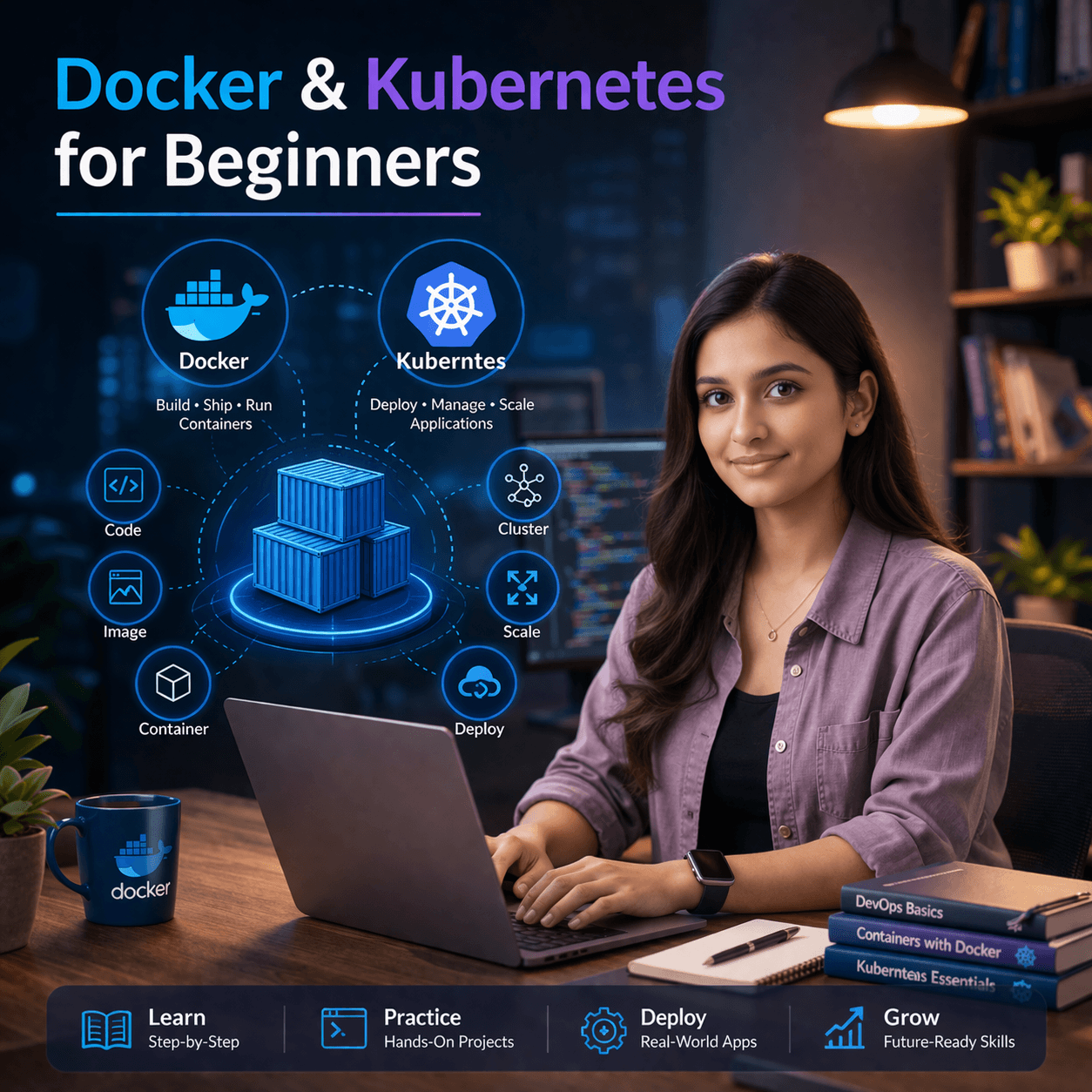
Docker & Kubernetes for Beginners
Docker & Kubernetes for Beginners | A developer getting started with Docker and Kubernetes focuses on building, deploying, and managing applications using container-based technologies.
Instead of relying on system-specific setups, modern development uses containers to ensure consistency. Docker makes this possible by packaging applications with their dependencies. Kubernetes, on the other hand, manages these containers at scale, ensuring smooth performance across environments.
Because of this combination, developers can avoid common deployment issues and work more efficiently.
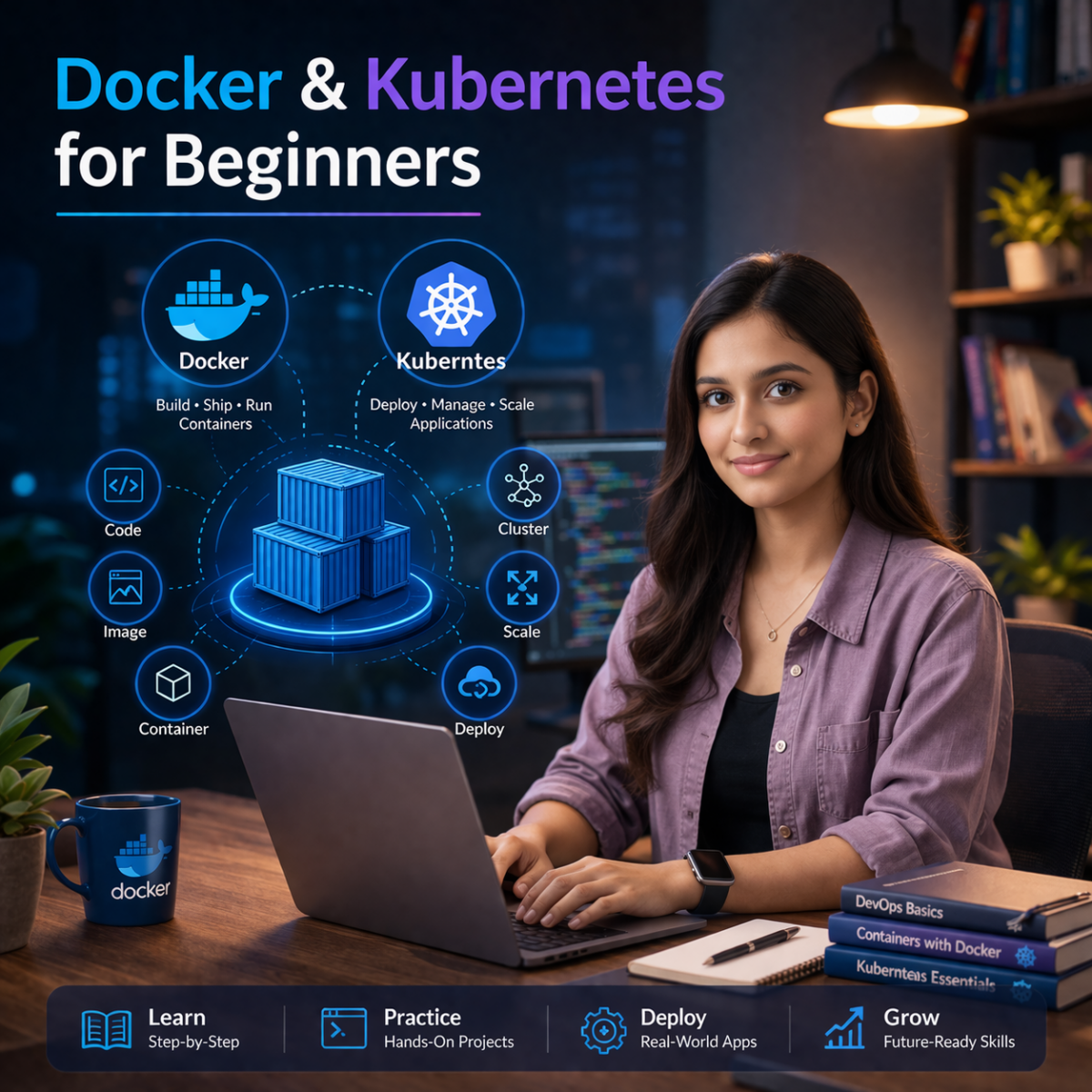
Why Docker & Kubernetes Matter
Managing modern applications is no longer simple, especially when multiple services are involved. Rather than handling everything manually, developers now rely on tools that automate these processes.
Docker simplifies how applications are created and shared, while Kubernetes ensures those applications run reliably. Additionally, scaling becomes much easier since Kubernetes adjusts resources based on demand.
As a result, teams can release updates faster and maintain better system stability.
Understanding Docker
Before moving into orchestration, learning Docker is essential. It allows applications to run inside containers, which keeps environments consistent.
Instead of repeating setup steps on every machine, developers can define everything once and reuse it anywhere. This approach not only saves time but also reduces errors.
For example, a containerized application behaves the same in development and production, eliminating compatibility concerns.
Understanding Kubernetes
Once Docker basics are clear, Kubernetes becomes the next step. Managing multiple containers manually can quickly become complex; however, Kubernetes automates this process.
Deployment, scaling, and recovery are handled automatically, which improves reliability. Furthermore, applications remain stable even when traffic increases or failures occur.
Because of these capabilities, Kubernetes is widely used in large-scale systems.
What Beginners Actually Do
Starting small is usually the best approach. Instead of jumping into advanced setups, beginners focus on simple, practical tasks.
Creating containers, running applications locally, and experimenting with deployments form the foundation. Over time, Kubernetes is introduced to manage multiple containers more efficiently.
Gradually, confidence builds as real-world scenarios become easier to handle.
Tools That Make Learning Easier
Choosing the right tools can simplify the learning process. Docker serves as the foundation, while Kubernetes builds on top of it.
Along with these, tools like Kubectl and Docker Compose help manage applications more effectively. In addition, cloud platforms provide hands-on experience with real deployments.
Using these tools together creates a strong and practical workflow.
Benefits of Learning Docker & Kubernetes
Strong demand in the job market makes these skills highly valuable. Beyond career growth, they also improve how developers build and manage applications.
Faster deployments, better scalability, and improved reliability are some of the key advantages. More importantly, working with modern DevOps practices becomes much easier.
In the long run, these skills help developers stay relevant in a rapidly evolving tech industry.
When to Start Learning
Basic programming knowledge is enough to begin this journey. Instead of waiting for the perfect time, starting early often leads to better results.
Although Kubernetes may seem complex at first, consistent practice makes it easier to understand. Step by step, concepts start connecting naturally.
Eventually, working with containers and orchestration becomes second nature.
Why Choose DeveloperBox
Practical learning plays a key role in mastering these technologies. At DeveloperBox, the focus stays on real-world implementation rather than just theory.
Hands-on projects, guided learning, and real deployment scenarios help build confidence. Instead of memorizing concepts, developers gain actual experience.
As a result, learners become job-ready and capable of handling real production environments.

Next article
How AI Automation Cuts Operational Overhead for Growing Teams
Ready to Transform Your Business with AI?
Let's discuss how our AI solutions can help you achieve your goals. Schedule a free consultation with our experts.
Schedule a Consultation