Authentication & Authorization Best Practices
Authentication & Authorization Best Practices Authentication & Authorization Best Practices is a crucial topic for building secure, reliable, and scalable web applica

By Admin
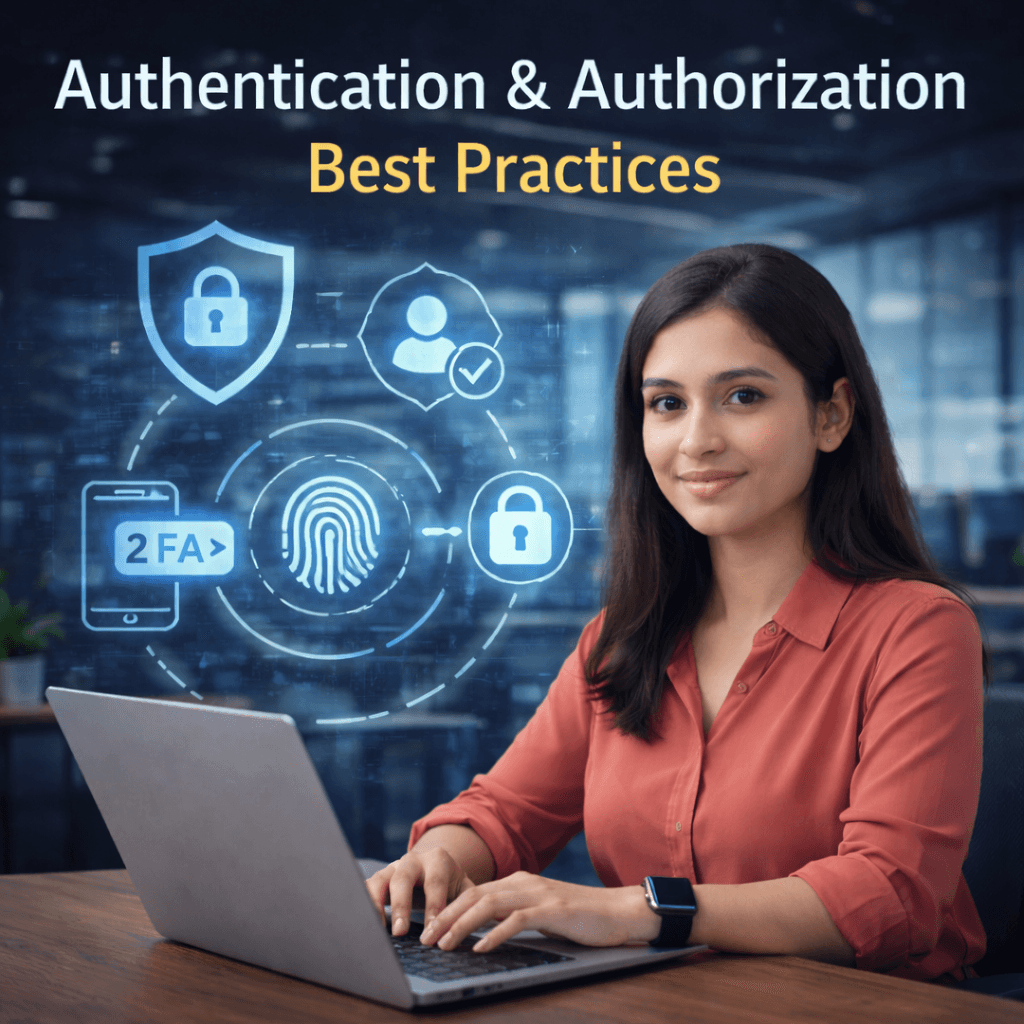
Authentication & Authorization Best Practices
Authentication & Authorization Best Practices is a crucial topic for building secure, reliable, and scalable web applications.
Authentication verifies who the user is, while authorization defines what the user can do within a system. As digital platforms continue to grow, strong security practices are no longer optional—they are essential.
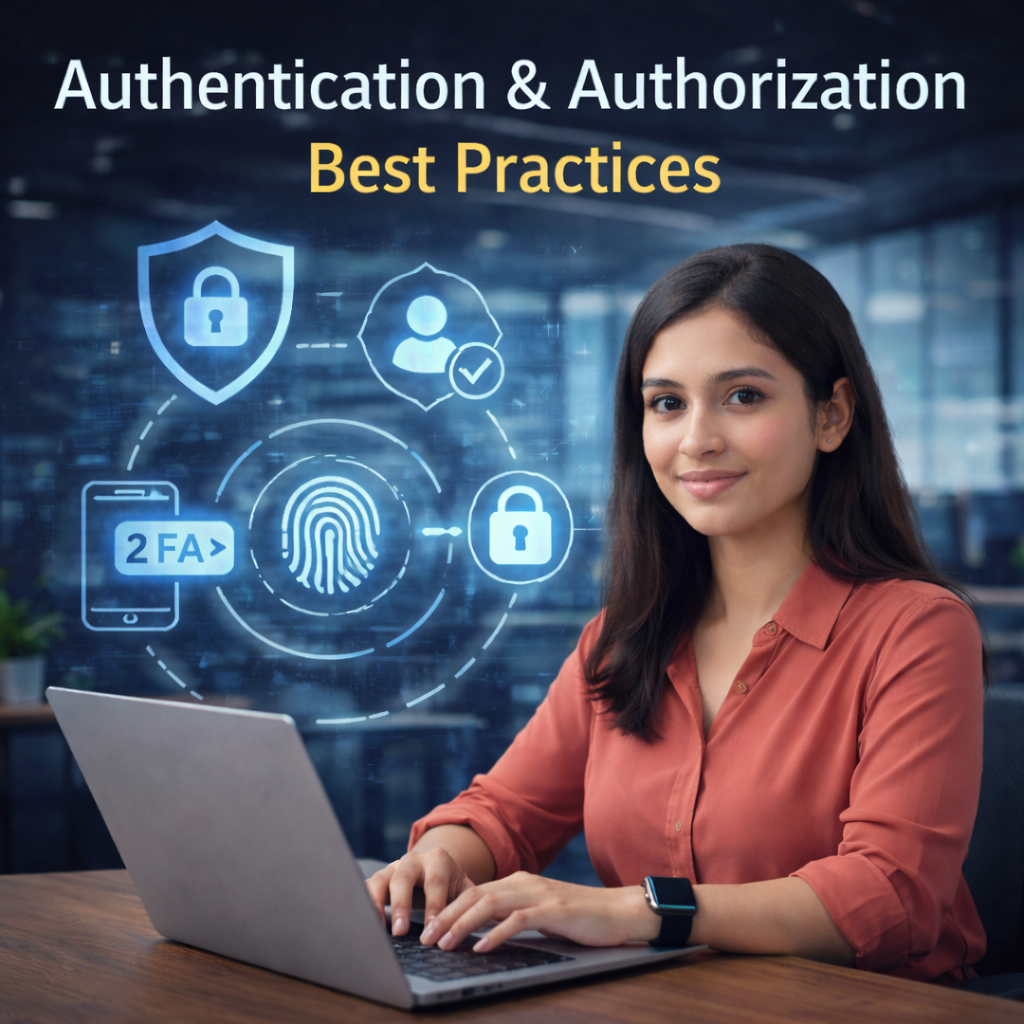
Why Authentication & Authorization Matter for Modern Applications
Today, businesses handle sensitive data such as user credentials, payments, and private information. Therefore, security must be a top priority.
Strong authentication and authorization help in:
Protecting user identities
Preventing unauthorized access
Ensuring data privacy and compliance
Building trust with customers
Reducing the risk of cyberattacks
As a result, both startups and enterprises benefit from implementing these practices early.
Understanding Authentication
Authentication is the process of verifying a user’s identity before granting access.
For example, users may log in using:
Passwords and PINs
One-Time Passwords (OTP)
Biometric verification (fingerprint or face recognition)
Multi-Factor Authentication (MFA)
Social logins like Google or Facebook
Moreover, modern systems are increasingly adopting passwordless authentication methods. These include magic links and email-based login systems, which improve both security and user experience.
Understanding Authorization
Once a user is authenticated, the system must decide what they are allowed to do. This process is called authorization.
It typically includes:
Role-Based Access Control (RBAC)
Attribute-Based Access Control (ABAC)
Permission-based access
Defined user roles such as admin, user, or guest
In addition, proper authorization prevents users from accessing restricted data or performing unauthorized actions.
Best Practices for Authentication
To improve security, businesses should follow proven authentication strategies.
For instance:
Use Multi-Factor Authentication (MFA) to add an extra layer of security
Store passwords securely using hashing algorithms like bcrypt
Enforce strong password policies
Use HTTPS to encrypt data in transit
Implement secure session management
Enable account lockout after repeated failed attempts
Furthermore, integrating CAPTCHA can help prevent automated attacks, while regular credential rotation adds another layer of protection.
Best Practices for Authorization
Authorization must be carefully implemented to avoid security gaps.
Here are some key practices:
Follow the principle of least privilege
Use Role-Based Access Control (RBAC)
Validate permissions on both frontend and backend
Regularly audit roles and permissions
Avoid hardcoding access rules
Additionally, using secure tokens like JWT ensures safer communication between systems. It is also important to revoke access immediately when it is no longer required.
Common Mistakes to Avoid
Even well-designed systems can fail due to simple mistakes.
Some common issues include:
Using weak or repeated passwords
Relying only on frontend validation
Not expiring sessions or tokens
Giving excessive permissions to users
Ignoring security updates
Therefore, regular monitoring and updates are critical to maintaining system security.
Benefits of Strong Security Implementation
Implementing proper authentication and authorization provides multiple advantages.
These include:
Enhanced data protection
Improved user trust
Reduced risk of cyber threats
Better compliance with regulations
Scalable and secure architecture
In the long run, secure systems also reduce costs related to data breaches and recovery.
When Should You Focus on Security?
Security should not be an afterthought. Instead, it must be integrated from the beginning.
You should prioritize authentication and authorization if:
You are building a web or mobile application
Your platform handles sensitive data or payments
You are developing APIs or backend services
You are scaling your application
Your system has existing vulnerabilities
In short, any digital product with users requires strong security measures.
Why Choose DeveloperBox for Secure Development?
At DeveloperBox, we build secure and scalable applications using industry-standard practices.
We focus on:
Secure authentication systems
Advanced access control mechanisms
Data encryption and protection
Secure API development
Regular security audits
Whether you are launching a new product or improving an existing one, we help you build safe and reliable digital solutions.

Next article
How AI Automation Cuts Operational Overhead for Growing Teams
Ready to Transform Your Business with AI?
Let's discuss how our AI solutions can help you achieve your goals. Schedule a free consultation with our experts.
Schedule a Consultation