

How to Turn Your Idea into a Minimum Viable Product (MVP)”
Turning an idea into a successful digital product can feel overwhelming. Many entrepreneurs and businesses struggle with where to start, how much to build, and how to validate their concept without wasting time and money. This is where a Minimum Viable Product (MVP) becomes essential.
An MVP is a simplified version of your product that includes only the core features needed to solve a specific problem. It allows you to launch quickly, test your idea in the real market, and gather valuable feedback before investing heavily in full-scale development.
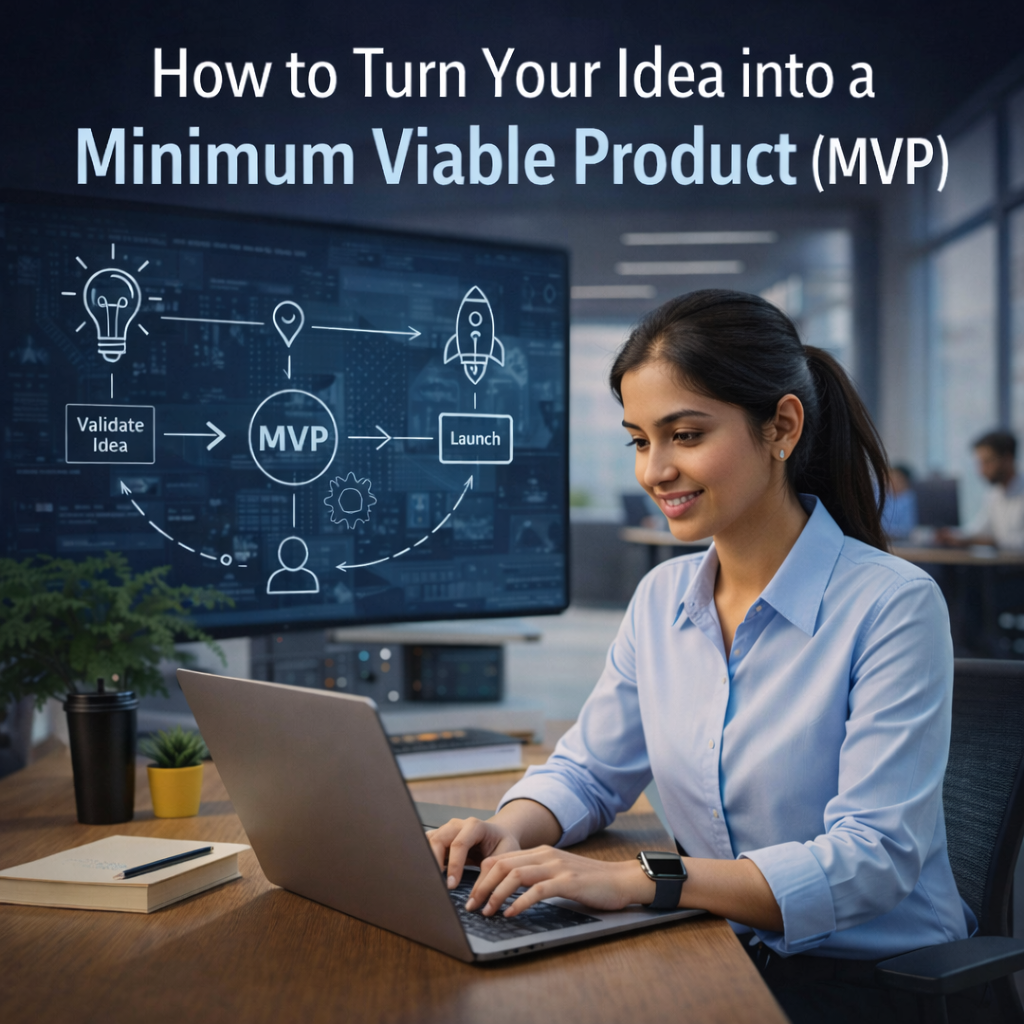
What is an MVP?
A Minimum Viable Product is not a half-built product—it’s a smartly built product. It focuses on delivering value with minimal features while solving the main problem for users.
The goal of an MVP is to:
- Validate your idea
- Reduce development costs
- Launch faster
- Learn from real users
Step-by-Step Guide to Building an MVP
1. Identify the Problem
Every successful product starts with a clear problem. Ask yourself:
- What problem am I solving?
- Who is facing this problem?
- Why is this problem important?
Your MVP should focus on solving one core issue effectively rather than trying to do everything at once.
2. Define Your Target Audience
Understanding your users is crucial. Identify:
- Who will use your product?
- What are their pain points?
- What solutions are they currently using?
This helps you build a product that actually meets user needs.
3. List Core Features
Avoid feature overload. Focus only on essential functionalities.
For example:
If you’re building a food delivery app, your MVP might include:
- User registration
- Restaurant listing
- Order placement
- Payment integration
Leave advanced features like reviews, loyalty programs, or AI recommendations for later stages.
4. Create a Simple Prototype
Before development, create wireframes or prototypes to visualize your idea. This helps:
- Clarify product flow
- Identify usability issues early
- Communicate your vision to developers
5. Choose the Right Technology
Selecting the right tech stack is critical for speed and scalability. Modern frameworks allow faster MVP development with better performance.
Using efficient front-end technologies ensures:
- Smooth user experience
- Faster loading times
- Easy scalability for future growth
6. Build and Launch Quickly
Speed matters. The goal is not perfection—it’s validation.
Focus on:
- Clean and functional design
- Stable performance
- Core feature delivery
Launch your MVP as soon as it’s usable.
7. Collect Feedback and Improve
Once your MVP is live:
- Gather user feedback
- Track user behavior
- Identify what works and what doesn’t
Use this data to improve your product and plan future features.
Common Mistakes to Avoid
- Building too many features at the start
- Ignoring user feedback
- Spending too much time on design instead of functionality
- Delaying launch in pursuit of perfection
Remember, an MVP is about learning, not perfection.
Benefits of Building an MVP
- Lower development cost
- Faster time-to-market
- Reduced risk
- Better product-market fit
- Real user insights
When Should You Build an MVP?
You should consider building an MVP if:
- You have a startup idea
- You want to test a new business concept
- You need investor validation
- You want to launch quickly with limited resources
Final Thoughts
Building an MVP is the smartest way to bring your idea to life. Instead of waiting months (or years) to launch a complete product, an MVP helps you start small, learn fast, and grow strategically.
Whether you’re a startup founder or a business owner looking to go digital, focusing on a well-planned MVP can save time, money, and effort—while increasing your chances of success.
Start simple, stay focused, and build something your users truly need.
Follow Us On Instagram | Follow Us On Facebook