

Frontend vs Backend vs Full Stack: What Should You Learn in 2026?
In today’s rapidly evolving tech landscape, choosing the right development path can shape your entire career. Whether you’re a beginner or looking to upgrade your skills, understanding the difference between frontend, backend, and full stack development is essential.
With the growing IT ecosystem in cities like Raipur, the demand for skilled developers in all three domains is increasing across startups, agencies, and established businesses.
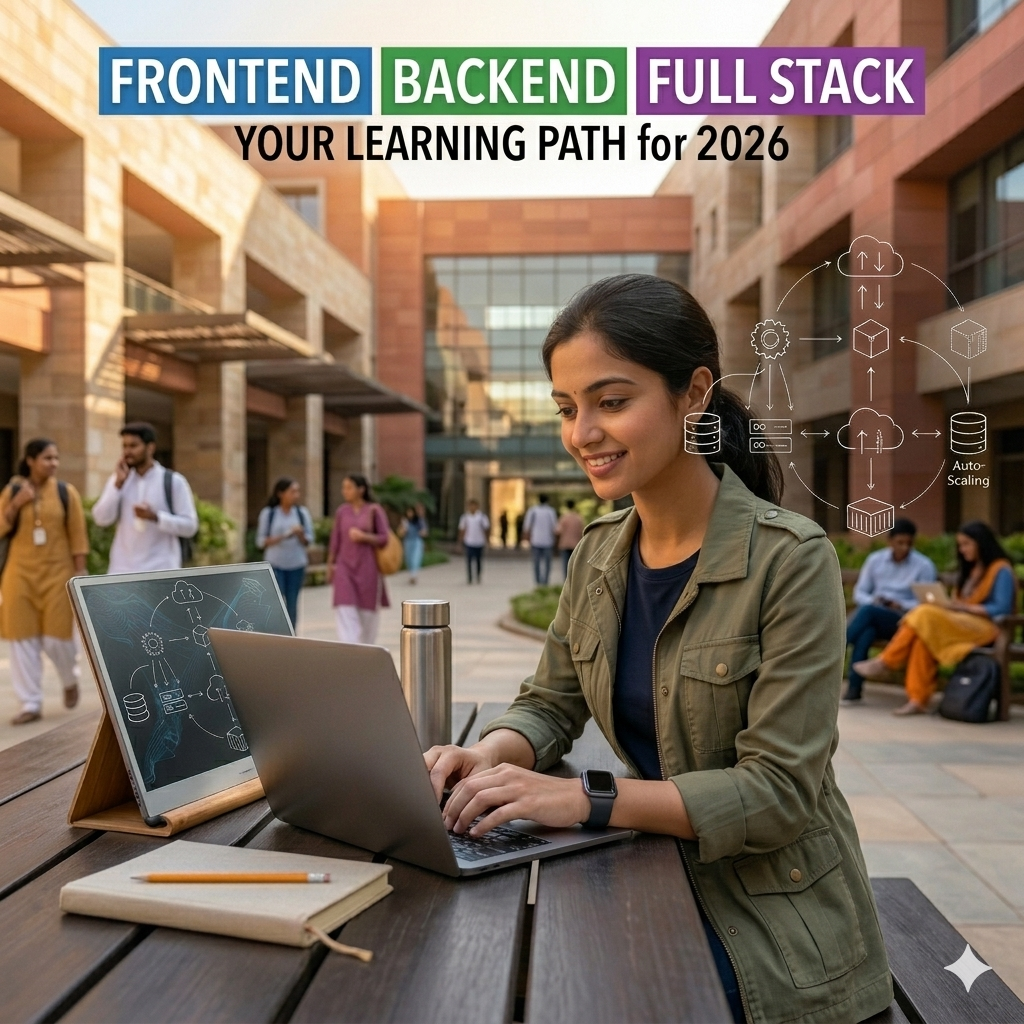
Why Choosing the Right Development Path Matters
Each development role plays a crucial part in building modern web applications. Selecting the right path helps you:
- Build a strong and focused skillset
- Increase job opportunities
- Align with your interests and strengths
- Grow faster in your tech career
What is Frontend Development?
Frontend development focuses on what users see and interact with on a website or application.
Frontend developers:
- Design and develop user interfaces
- Create responsive layouts
- Improve user experience (UI/UX)
- Work with technologies like HTML, CSS, JavaScript
Modern tools and libraries make frontend development faster and more interactive, making it ideal for creative individuals.
What is Backend Development?
Backend development deals with the server-side of applications — everything that happens behind the scenes.
Backend developers:
- Manage databases
- Build APIs
- Handle server logic
- Ensure security and performance
Common backend technologies include Node.js, Python, PHP, and databases like MySQL and MongoDB.
What is Full Stack Development?
Full stack development combines both frontend and backend skills.
Full stack developers:
- Build complete web applications
- Handle both client-side and server-side logic
- Manage databases and UI together
- Work on end-to-end project development
This role is highly in demand, especially in startups and small teams.
Key Differences Between Frontend, Backend, and Full Stack
| Feature | Frontend | Backend | Full Stack |
|---|---|---|---|
| Focus | User Interface | Server & Database | Both Frontend & Backend |
| Skills Required | UI/UX, Design | Logic, Database, Security | Combination of both |
| Tools | HTML, CSS, JS | Node.js, Python, PHP | All technologies |
| Career Path | UI Developer | Server-side Developer | Full Application Developer |
Which One Should You Learn in 2026?
Your choice depends on your interests and career goals:
Choose Frontend if:
- You enjoy design and creativity
- You like building interactive interfaces
- You want quick visual results
Choose Backend if:
- You enjoy logic and problem-solving
- You like working with data and servers
- You are interested in system architecture
Choose Full Stack if:
- You want versatile skills
- You aim to build complete applications
- You want more job opportunities
Industry Demand in 2026
The demand for developers is growing rapidly, especially in emerging tech hubs like Raipur.
- Startups prefer full stack developers for flexibility
- Enterprises hire specialized frontend and backend developers
- Freelancing opportunities are high for frontend and full stack roles
Benefits of Learning Development Skills
- High-paying career opportunities
- Remote work and freelancing options
- Ability to build your own projects or startup
- Continuous learning and growth
Common Mistakes to Avoid
- Trying to learn everything at once
- Ignoring fundamentals (HTML, CSS, JS, logic)
- Not building real-world projects
- Skipping version control tools like Git
- Lack of consistency in learning
Tips to Get Started in 2026
- Start with the basics (HTML, CSS, JavaScript)
- Choose a specialization after exploring
- Build small projects and portfolios
- Learn from real-world applications
- Stay updated with industry trends
Conclusion
Frontend, backend, and full stack development all offer excellent career opportunities in 2026. The right choice depends on your interests, strengths, and long-term goals.
As the tech industry continues to grow in cities like Raipur, skilled developers will remain in high demand. Whether you choose frontend, backend, or full stack, consistent learning and practical experience will be the key to your success.